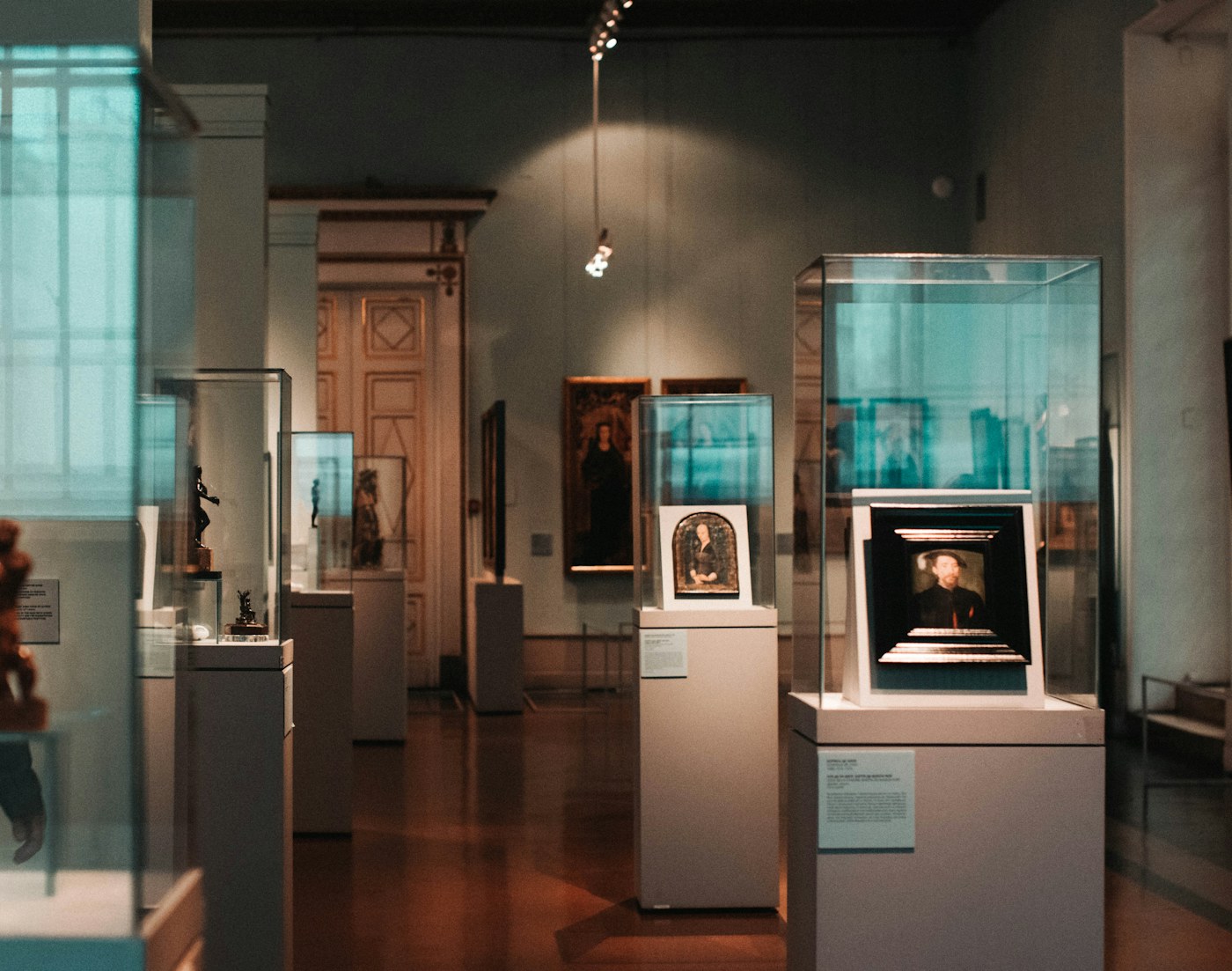
Collections · material atlas
Chronology matters, but material gives the eye a faster entry. Stone, wood, faience, metal and pigment each reveal a different relationship between craft, use and time.
Muse Easy
Five material cues
Start at the surface, then connect the physical evidence to image and context. The sequence keeps a large collection from becoming visual noise.
Stone
Look for polish, fracture, scale and the way light rests on a hard surface.
Wood
Notice grain, joinery, paint and the warmth that survives beneath a case.
Faience
Follow colour, glaze and small repeated forms instead of only monumental scale.
Metal
Read shine, weight and wear as evidence of making and handling.
Pigment
Ask what colour changes about the object’s intended presence.
Muse Easy
Read labels in two passes
The first pass tells you what the object is. The second asks what the label leaves open: reuse, restoration, find spot or the history of display.
- Pair period with material.
- Separate ancient purpose from modern interpretation.
- Keep one detail in memory instead of photographing everything.